
There’s something so satisfying about a meal that’s as vibrant in flavor as it is simple to make. The Honey Mustard Salmon Sheet Pan Recipe delivers on that promise with tender, flaky salmon glazed in a sweet and tangy sauce, surrounded by perfectly roasted potatoes and crisp broccoli—all cooked at once on a single pan. It’s a weeknight winner you’ll want to make again and again.

Jump to:
Why You'll Love This Recipe
I honestly can’t get enough of this Honey Mustard Salmon Sheet Pan Recipe—it feels fancy but takes hardly any effort. What really gets me every time is the combination of flavors that feel bright without overpowering the salmon, and the hands-off cooking means you’re free to relax or prep other things while it bakes.
- One-pan ease: You only need a single sheet pan, making cleanup a breeze—what’s not to love about that?
- Balanced meal: Protein, veggies, and potatoes all roast together, saving you time and effort in the kitchen.
- Flavor-packed glaze: The honey mustard sauce perfectly marries sweet, tangy, and savory notes that complement the salmon beautifully.
- Customizable: You can easily swap vegetables or adjust seasoning to fit your taste or what’s on hand.
Ingredients & Why They Work
Each ingredient in this Honey Mustard Salmon Sheet Pan Recipe plays an important role—from the tangy mustard to the sweetness of honey that balances the whole dish. Here’s why I love the choices here and tips on selecting the freshest ingredients for the best results.

- Honey: Adds natural sweetness to balance the mustard’s tang, plus it helps create a gorgeous glaze on the salmon.
- Whole grain mustard: Gives a beautiful texture and a burst of sharpness that lifts the flavors without overwhelming.
- Olive oil: Keeps everything moist and helps the salmon and veggies roast to perfection with a lovely sheen.
- Lemon zest: Brings a fresh citrus brightness that wakes up the dish; zest rather than juice to keep the glaze thick.
- Garlic: Enhances the overall savory notes and adds warmth without being too pungent.
- Dried thyme: A classic herb that complements salmon beautifully; if you have fresh, that works well too.
- Salt & pepper: Essential for seasoning; I always recommend tasting your glaze before coating the salmon to balance it well.
- Salmon filets: Look for fresh, firm filets about 1 inch thick—this thickness allows even cooking during roasting.
- Cooking spray: Keeps the sheet pan non-stick and helps veggies and fish roast rather than steam.
- Broccoli florets: They roast nicely and get a slight crispy edge, making them a perfect foil to tender salmon.
- Small red or yellow potatoes: Their size keeps cooking times manageable and their natural sweetness pairs well with the honey mustard.
Make It Your Way
I love putting my own spin on this Honey Mustard Salmon Sheet Pan Recipe depending on the season or what’s in my fridge. You’ll find it easy to tweak, and that’s where the real fun begins—don’t be shy about making it your own!
- Variation: Sometimes I swap the broccoli for asparagus or green beans when they’re in season, which gives a slightly different texture and keeps the meal exciting.
- Dietary tweaks: For a lower-carb version, swap the potatoes with cauliflower florets—roasted cauliflower soaks up the honey mustard sauce beautifully.
- Spice it up: Add a pinch of cayenne or smoked paprika in the glaze if you like a bit of kick.
- Glaze texture: For a smoother glaze, you can blend the sauce ingredients quickly before brushing on the salmon.
Step-by-Step: How I Make Honey Mustard Salmon Sheet Pan Recipe

Step 1: Whisk Up the Perfect Glaze
Start by mixing the honey, whole grain mustard, 1 tablespoon of olive oil, garlic, lemon zest, thyme, salt, and pepper in a small bowl. I always taste at this point and adjust the salt or mustard level—this glaze carries the whole dish, so getting it right early really pays off.
Step 2: Coat the Salmon
Place your salmon fillets in a shallow dish and spoon the glaze generously over top. Use a brush or spatula to really make sure the salmon is coated on all sides; don’t rush this step, the marinade flavor is what makes the fish shine.
Step 3: Prep and Roast Potatoes First
Spray your baking sheet well with cooking spray, then toss the halved potatoes with a reserved 3 tablespoons of the honey mustard glaze right on the pan. I like to spread them cut-side down so they crisp up beautifully. Pop them in the oven for 15 minutes—this jumpstart ensures they get tender before adding the other ingredients.
Step 4: Add Broccoli and Salmon
Once the potatoes have a head start, pull out the pan and push them to one side. Lay the broccoli on the opposite side, drizzle with olive oil, sprinkle with salt, and give it a toss right on the pan. Finally, nestle the salmon fillets in between. The timing here is key—everything cooks evenly and comes out perfectly.
Step 5: Roast Until Flaky and Delicious
Return the pan to the oven and roast for about 8-13 minutes, depending on your salmon size. You’ll know it’s done when the salmon easily flakes with a fork but still feels moist. Keep an eye on the broccoli and potatoes—they should be tender and caramelized at the edges.
Top Tip
From my experience, mastering the timing and layering on the sheet pan turns this recipe from good to fantastic. Here are the tricks I’ve learned that really make a difference when making Honey Mustard Salmon Sheet Pan Recipe.
- Prep the potatoes first: Don’t add everything to the sheet pan at once—the potatoes take longer, so giving them a 15-minute head start is crucial for even cooking.
- Use fresh lemon zest: It adds a fresh punch that brightens the heaviness of the honey and mustard, making the dish feel light and vibrant.
- Coat the salmon thoroughly: Brushing the glaze well ensures every bite is flavorful and gives you those beautiful caramelized bits on the fish.
- Avoid overcrowding: Give your veggies and fish room on the pan so they roast instead of steam—this keeps textures spot on.
How to Serve Honey Mustard Salmon Sheet Pan Recipe

Garnishes
I always serve this with fresh lemon wedges—not just for the zesty garnish but squeezing over the salmon adds such a fresh brightness that cuts through the richness. Sometimes I sprinkle a few chopped fresh parsley or dill leaves on top when I want it to look extra special.
Side Dishes
Since this recipe includes veggies and potatoes, it’s a complete meal on its own. But if I want to round it out, a simple mixed green salad or some crusty bread makes a lovely addition to soak up any extra sauce. On cooler days, a light soup alongside works beautifully too.
Creative Ways to Present
For dinner parties, I like to plate the salmon and veggies on a big platter garnished with lemon slices and fresh herbs. It looks inviting and makes serving easy. Another fun trick is to arrange the potatoes and broccoli as a colorful bed with the salmon fillets nestled on top like a centerpiece.
Make Ahead and Storage
Storing Leftovers
I store leftovers in an airtight container in the refrigerator and they usually keep well for up to 2 days. The salmon is still tasty cold if you prefer, but I personally like reheating gently to keep it moist.
Freezing
This recipe freezes okay though I recommend freezing the salmon separately from the potatoes and broccoli for best texture later. Wrap the salmon tightly in plastic wrap and foil to avoid freezer burn, and freeze for up to 1 month.
Reheating
Reheat leftovers in the oven at low temperature (around 300°F) for about 10-15 minutes, or until warmed through. This keeps the salmon juicy and prevents it from drying out. You can also gently reheat the salmon in a microwave, but watch closely to avoid overcooking.
Frequently Asked Questions:
You can use frozen salmon, but be sure to fully thaw it in the refrigerator before preparing this Honey Mustard Salmon Sheet Pan Recipe. Thawing ensures even cooking and helps the glaze adhere properly.
If you don’t have whole grain mustard on hand, Dijon mustard makes a great substitute and will still give you that tangy kick. Just note that the texture will be smoother without the mustard seeds.
Absolutely! This Honey Mustard Salmon Sheet Pan Recipe is naturally gluten-free as long as you use pure honey and ensure your mustard and other ingredients aren’t processed with gluten-containing additives.
Salmon is done when it flakes easily with a fork but still feels moist inside. Overcooking drys it out, so keep an eye during baking and check around the minimum cooking time—thicker fillets will take longer.
Final Thoughts
This Honey Mustard Salmon Sheet Pan Recipe is one of those dishes I recommend making over and over because it just works every time. It’s quick, wholesome, and full of flavor—a perfect way to bring a restaurant-quality meal into your own kitchen without fuss. Trust me, once you try it, it’ll become a go-to in your weeknight rotation too.
Print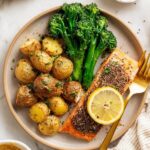
Honey Mustard Salmon Sheet Pan Recipe
- Prep Time: 15 minutes
- Cook Time: 28 minutes
- Total Time: 43 minutes
- Yield: 4 servings
- Category: Main Course
- Method: Baking
- Cuisine: American
- Diet: Low Lactose
Description
This Sheet Pan Honey Mustard Salmon recipe is a quick and flavorful meal that combines tender salmon filets with roasted potatoes and broccoli, all coated in a tangy honey mustard sauce. Perfect for a balanced and delicious dinner, it’s easy to prepare and cook on a single pan, making cleanup a breeze.
Ingredients
Sauce and Marinade
- ¼ cup pure honey
- 3 tablespoons whole grain mustard
- 1 ½ tablespoons olive oil, divided
- Zest of 1 lemon (1-2 teaspoons), plus lemon wedges for serving
- 1 large or 2 small garlic cloves, finely minced (2 teaspoons)
- ½ teaspoon dried thyme
- ½ teaspoon fine salt, plus more to taste
- ¼ teaspoon black pepper
Main Ingredients
- 4 salmon filets, about 1 inch thick (4-5 oz each)
- Cooking spray
- 1 large head broccoli, cut into florets (4-5 cups)
- 1 lb small red or yellow potatoes, cut in half if large
Instructions
- Preheat Oven: Preheat the oven to 400°F to prepare for baking the salmon, potatoes, and broccoli.
- Make Honey Mustard Sauce: In a small bowl, whisk together the honey, whole grain mustard, 1 tablespoon olive oil, lemon zest, minced garlic, dried thyme, salt, and black pepper. Taste and adjust salt if needed. Set aside 3 tablespoons of this sauce for the potatoes.
- Marinate Salmon: Place the salmon filets in a shallow bowl. Spoon the remaining honey mustard sauce over the salmon and use a spatula or marinade brush to evenly coat all sides. Set aside to marinate briefly while preparing the vegetables.
- Prepare Baking Sheet: Generously coat a large rimmed baking sheet with cooking spray.
- Prepare and Roast Potatoes: Spread the halved potatoes on the prepared baking sheet and toss them with the reserved 3 tablespoons of honey mustard mixture until evenly coated. Arrange potatoes cut-side down in an even layer and bake for 15 minutes.
- Add Broccoli and Salmon: Remove the baking sheet from the oven. Push potatoes to one side to occupy about one-third of the pan. Add broccoli florets to the opposite side, drizzle with the remaining ½ tablespoon olive oil, toss to coat, and sprinkle with a pinch of salt. Place the marinated salmon in the middle space between potatoes and broccoli.
- Bake Until Cooked: Return the pan to the oven and bake for an additional 13 minutes, or until the salmon flakes easily with a fork and vegetables are tender.
- Serve: Serve the honey mustard salmon with roasted potatoes and broccoli alongside lemon wedges for squeezing over the dish.
Notes
- This recipe brings together protein, vegetables, and carbohydrates for a complete and balanced sheet pan meal.
- Using whole grain mustard adds texture and depth to the sauce.
- If fresh lemon is not available, you can substitute with 1 teaspoon lemon juice and 1 teaspoon lemon zest.
- Cooking time depends on salmon thickness; ensure salmon flakes easily to avoid undercooking.
- To make cleanup easier, line the baking sheet with parchment paper or aluminum foil.
Nutrition
- Serving Size: 1 serving
- Calories: 323 calories
- Sugar: 15 g
- Sodium: 528 mg
- Fat: 10 g
- Saturated Fat: 2 g
- Unsaturated Fat: 8 g
- Trans Fat: 0 g
- Carbohydrates: 36 g
- Fiber: 4 g
- Protein: 28 g
- Cholesterol: 52 mg


Leave a Reply